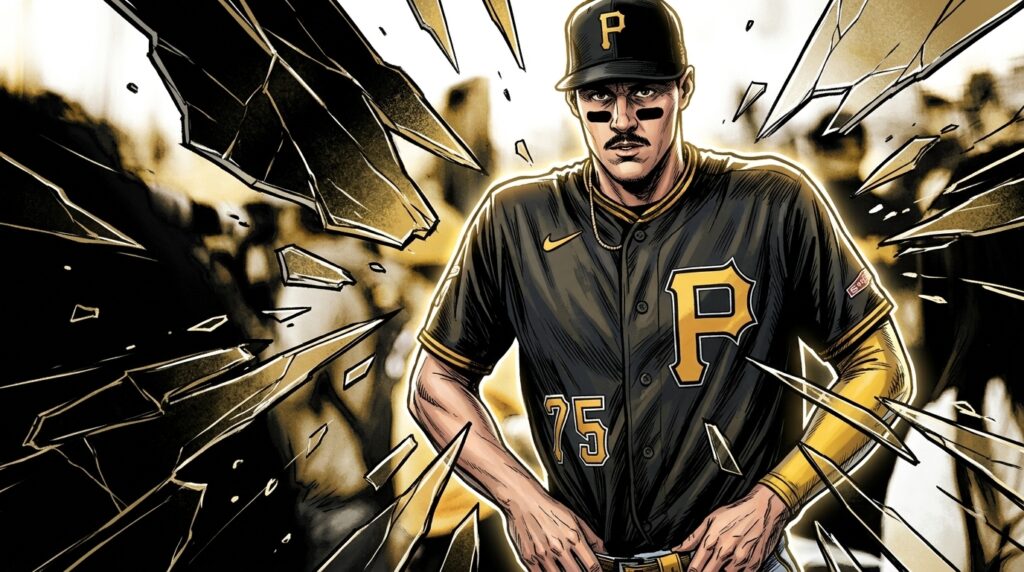
The Pittsburgh Pirates are 12-8 and sitting in or near first place in the NL Central. Write that sentence down, print it out, put it on your refrigerator if you need to, because it’s real and it’s April 19 and nobody credible predicted this would be where we were.
This team has been disappointing fans for a decade. The last postseason appearance was 2015 — a wild-card loss to the Cubs that now feels like a different geological era. Everything since has been a revolving door of prospects who didn’t pan out, trades that went sideways, and Aprils that felt fine right up until they didn’t. Pittsburgh fans have been burned enough times that healthy skepticism isn’t cynicism; it’s pattern recognition. Acknowledging that pattern is exactly why this April matters more than the surface record suggests.
The skeptics aren’t wrong to wait. But they might be waiting for something that’s already arrived.
Griffin, Pirates agreement is 9 years https://t.co/FvH2sm3VXI
— Jon Heyman (@JonHeyman) April 8, 2026
Konnor Griffin debuted on April 2 at PNC Park against the Baltimore Orioles — the home opener — and in his first career at-bat of consequence, he lined an RBI double that helped the Pirates win 5-4. He was 19 years old. The last teenage position player to appear in a major league game was Juan Soto in 2018, which means Griffin is doing something that nobody has done in eight years, which means the Pirates have a player who by definition cannot be evaluated by normal expectation frameworks.
His numbers through 14 games are modest — a .214 average, no home runs, 6 RBI, an OPS hovering around .602. Anyone pointing to that line as a referendum on Griffin’s future is confusing the preview with the film. What the numbers actually reflect is a 19-year-old shortstop who was the consensus top prospect in baseball entering this season, learning the adjustments major league pitching demands in real time, in front of a home crowd that would carry him on their shoulders if he let them. The adjustment period for players this young, this good, this early often looks exactly like this.
The franchise voted with their checkbook before the ink had dried on his rookie impressions. On April 8, the Pirates signed Griffin to a 9-year, $140 million extension — a franchise record that eclipses Bryan Reynolds’ $106.75 million deal and runs through 2034 with incentives up to $150 million. No deferred money. No opt-outs. Pittsburgh locked in their next decade of baseball with a player who had been in the majors for six days. That’s not impulsive; that’s clarity about what they have.
The player his teammates describe doesn’t sound like a teenager navigating the big leagues — it sounds like someone who has already done that part internally. “There’s nothing that’s happened where I’m like, ‘That’s just a kid,'” Bryan Reynolds said. Ryan O’Hearn specifically pointed to Griffin’s defense: “He hasn’t done one single thing that I was like, ‘Yeah, he’s 19.'” Manager Don Kelly noticed the less obvious stuff — the other-people-first instinct that most 19-year-olds, regardless of talent level, haven’t yet developed.
Paul Skenes is already here. The reigning NL Cy Young winner posted a 1.97 ERA last season, and he’s presumably only getting better at 23. Now they’ve got Griffin committed through his age-27 season, which is the year most elite players enter their absolute prime. The Pirates are quietly building a core that could be dominant during a specific five-year window that’s coming whether or not anyone outside Pittsburgh wants to acknowledge it.
This is a 162-game sport, and April records have a way of softening by July. If history says anything about Pittsburgh, it says temper the optimism. But the difference between every other promising Pirate April in recent memory and this one is that this roster has a 19-year-old shortstop signed for nine years and a Cy Young pitcher who isn’t going anywhere. The ceiling keeps going up even when the present looks modest. That’s not hope dressed up as analysis — that’s just what the construction looks like from here.